Euphoria Telecom
The Euphoria Team
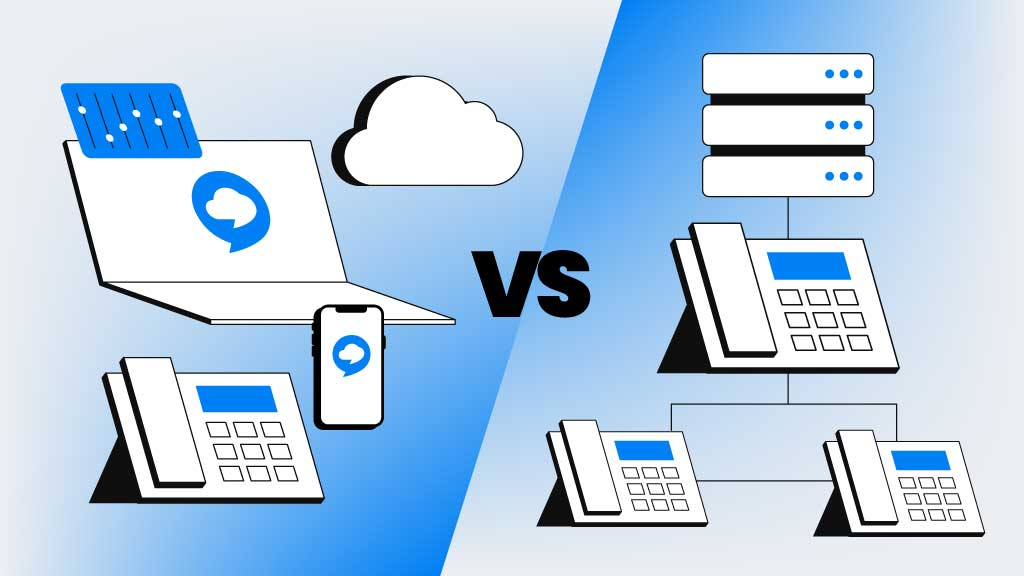
If you’re researching on-premise PBX vs cloud PBX, chances are you’re trying to answer one simple question:
Which phone system makes the most sense for my business today?
The short answer? For most modern businesses, cloud PBX wins. But let’s unpack why.
This guide will walk you through the real differences between an on-site PBX system and a cloud-based PBX solution, in plain English, so you can make a confident, future-focused decision.
What Is an On-Premise PBX?
An on-premise PBX (Private Branch Exchange) is a physical phone system installed at your business premises.
It typically:
- Lives in a server room or network cabinet
- Requires dedicated hardware
- Needs on-site maintenance
- Involves upfront capital investment
- Often runs on ageing infrastructure
It’s essentially a box that connects your desk phones internally and to external phone lines.
For years, this was standard business telephony. But technology has evolved.
What Is a Cloud PBX?
A cloud PBX (also called hosted PBX or VoIP PBX) runs entirely over the internet.
There’s no bulky hardware on your premises. The infrastructure lives securely in the cloud, managed by your provider.
With a cloud PBX, your business phone system becomes:
- Flexible
- Scalable
- Accessible from anywhere
- Feature-rich
- Continuously updated
Instead of maintaining a physical switchboard, you access a secure online interface that lets you manage your system in real time.
On-Premise PBX vs Cloud PBX: Key Differences
Here’s where the contrast becomes clear.
Hardware vs No Hardware
On-Premise PBX
- Requires physical equipment
- Needs space, cooling and power
- Can become outdated quickly
Cloud PBX
- No on-site hardware required
- Fully managed remotely
- Always up to date
If something fails on an on-prem system, someone physically has to fix it. With cloud PBX, updates and support happen remotely.
Maintenance and Ongoing Costs
On-Premise PBX
- Ongoing maintenance contracts
- Repair costs
- Upgrade expenses
- High call costs
Cloud PBX
- No hardware maintenance
- Lower call costs
- Predictable monthly pricing
- No costly long-term buy-ins
Traditional systems often look cheaper upfront until you factor in maintenance, call charges and upgrades.
Scalability
On-Premise PBX
- Limited expansion capability
- Adding extensions can require hardware changes
- Not designed for fluctuating staff numbers
Cloud PBX
- Add or remove extensions instantly
- Scale up or down as your business changes
- Fully scalable without physical upgrades
Hiring five new staff members? Add five extensions in minutes. Downsizing? Remove them just as easily.
No technicians. No rewiring.
Remote Work and Mobile Integration
This is where older systems struggle.
On-Premise PBX
- Designed for fixed office environments
- No seamless mobile integration
- Difficult to support hybrid teams
Cloud PBX
- Mobile phone integration
- Remote extensions
- Work from anywhere functionality
- Multi-office coverage
In a world of hybrid teams and remote work, flexibility isn’t optional. It’s expected.
Features and Functionality
Modern businesses rely on data.
On-Premise PBX
- Limited reporting
- Minimal business analytics
- Basic call management
- Outdated technology
Cloud PBX
- 200+ advanced features
- Real-time business analytics
- Budget caps and call management controls
- Custom routing and automation
- Cutting-edge functionality
A physical PBX is essentially a switchboard. A cloud PBX is a business tool.
Business Continuity and Failover
This is critical, especially in South Africa.
On-Premise PBX
- Single point of failure
- Vulnerable to power outages
- No built-in load shedding resilience
Cloud PBX
- Failover resilience
- Calls reroute automatically
- Not dependent on a single physical location
- Designed for uptime
If your office loses power, your cloud PBX doesn’t.
Calls can reroute to mobiles, alternative branches or remote staff instantly.
Ease of Management
With traditional systems, changes require a technician.
With cloud PBX, you log into an intuitive management interface and:
- Add or remove extensions
- Adjust call routing
- Set budget caps
- Access analytics
- Monitor usage in real time
You control the engine behind your phone system.
Is On-Premise PBX Obsolete?
Not entirely. Some legacy environments still use it.
But for most small to medium businesses — and increasingly even large enterprises — on-premise PBX is:
- Less flexible
- Less resilient
- More expensive over time
- Harder to scale
- Poorly suited to modern work environments
Telephony has evolved. Business expectations have evolved. Infrastructure should too.
Why Businesses Are Moving to Cloud PBX
Businesses are switching to cloud PBX because they want:
- Lower operational costs
- Greater flexibility
- Better analytics
- Remote capability
- Resilience during outages
- Future-proof technology
It’s not just a phone system upgrade. It’s a strategic move.
So, Which Is Better for Your Business?
If your business:
- Has remote or hybrid staff
- Plans to grow
- Needs flexibility
- Wants lower call costs
- Requires business insights from call data
- Cannot afford downtime
Then cloud PBX is almost certainly the better option.
Why Euphoria’s Cloud PBX Ticks Every Box
At Euphoria Telecom, our cloud-based business phone solution is designed specifically for modern South African businesses.
With:
- 200+ powerful features
- No maintenance costs
- No long-term contracts
- Ongoing remote support
- Full scalability
- Multi-office capability
- Mobile integration
- Real-time analytics
- Failover resilience
You get more than just dial tone. You get control.
And unlike traditional on-premise PBX systems, there’s no bulky hardware sitting in a server room quietly ageing.
Just a smarter, leaner, future-ready solution.
Ready to Move from On-Premise to Cloud?
If you’re comparing on-premise PBX vs cloud PBX, you’re already asking the right question.
The next step is seeing how a cloud system would work for your specific business.
Speak to our team today for a personalised quote or demo and discover how easy modern business telephony can be.